Japanese gardens are widely admired for their beauty, balance, and ability to create a sense of tranquility within both natural and constructed environments. While visitors often appreciate their visual appeal, these landscapes represent much more than decorative spaces. Traditional Japanese gardens are shaped by centuries of cultural influences, philosophical ideas, and a deep appreciation for nature.
Across Japan, gardens can be found within temples, historic residences, public parks, and cultural landmarks. Each space is carefully designed to encourage observation, contemplation, and an awareness of seasonal change. Rather than attempting to dominate nature, traditional landscape design often seeks harmony between human intervention and the surrounding environment.
For travelers interested in understanding Japanese aesthetics and cultural values, exploring gardens can provide valuable insight into the relationship between nature, art, and daily life. Whether visiting a famous historic garden or a small local landscape, these spaces reveal a distinctive perspective that continues to influence Japanese design today.
The Philosophy Behind Japanese Gardens
The foundation of traditional Japanese gardens extends beyond appearance. Their design is often influenced by philosophical and spiritual concepts that emphasize balance, simplicity, impermanence, and respect for nature. Rather than creating perfectly symmetrical spaces, designers frequently embrace natural forms and subtle irregularities that reflect the organic world.
Many gardens are intended to create a sense of calm and reflection. Carefully arranged elements encourage visitors to slow down, observe details, and appreciate changing perspectives while moving through the landscape. Water, stone, plants, and open space are used not only for visual effect but also to create atmosphere and meaning.
Seasonality also plays an important role. A garden may present a completely different experience in spring, summer, autumn, and winter. This appreciation for seasonal transformation reflects broader cultural values that celebrate the beauty of change rather than permanence.
Related Reading: Japanese Culture and Traditions
Elements Commonly Found in Japanese Gardens
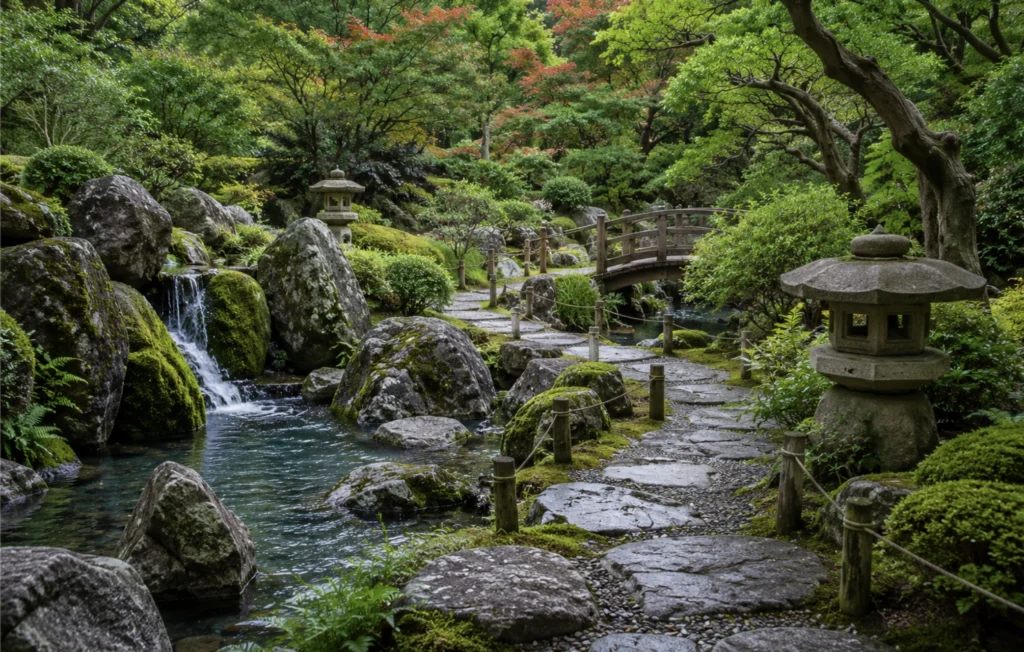
Although styles vary across regions and historical periods, many traditional Japanese gardens share several key design elements. These features work together to create harmony while guiding visitors through carefully composed landscapes.
Water and Reflection
Water is one of the most recognizable features found in Japanese gardens. Ponds, streams, waterfalls, and reflective surfaces often serve as focal points that introduce movement, sound, and visual depth into the landscape.
In many gardens, water symbolizes natural cycles and contributes to a sense of serenity. Reflections of trees, bridges, and seasonal colors create changing scenes that encourage visitors to appreciate subtle details throughout the year.
Stones and Pathways
Stone elements play a central role in traditional landscape design. Carefully positioned rocks may represent mountains, islands, or natural formations, while stone pathways help guide movement through the garden.
Rather than directing visitors along a straight route, pathways often reveal views gradually. This approach encourages exploration and creates a sense of discovery as new perspectives emerge around each turn.
Trees and Seasonal Plants
Plants are selected not only for their appearance but also for their ability to express seasonal change. Cherry blossoms, maple trees, pines, bamboo, and flowering shrubs are commonly incorporated into garden designs throughout Japan.
The careful arrangement of vegetation helps create balance while ensuring that each season offers a unique visual experience. Spring blossoms, summer greenery, autumn foliage, and winter silhouettes all contribute to the character of the landscape.
Related Reading: Best Time to Visit Japan
Famous Gardens Across Japan
Japan is home to numerous historic gardens that showcase different approaches to landscape design. While each destination has its own identity, several gardens are particularly well known for their cultural significance, beauty, and preservation.
Kenroku-en
Located in Kanazawa, Kenroku-en is frequently regarded as one of Japan’s most celebrated traditional gardens. Its design combines spacious landscapes, ponds, seasonal plants, and carefully maintained structures that create scenic views throughout the year.
Visitors often appreciate how the garden changes with the seasons. Cherry blossoms, lush greenery, colorful autumn leaves, and snow-covered scenery each provide distinct experiences that attract travelers at different times of the year.
Koraku-en
Koraku-en, located in Okayama, is another garden frequently recognized among Japan’s most important landscape destinations. Originally developed as part of a feudal estate, the garden combines open lawns, ponds, walking paths, and carefully arranged viewpoints that create a sense of spaciousness rarely found in traditional urban environments.
Unlike some gardens that emphasize enclosed spaces, Koraku-en incorporates broader vistas that encourage visitors to appreciate the surrounding scenery. Seasonal changes continue to play a significant role, ensuring that each visit offers a slightly different perspective throughout the year.
Kairaku-en
Located in Mito, Kairaku-en is particularly famous for its plum blossoms and extensive collection of flowering trees. The garden was designed with accessibility in mind, allowing a broader segment of society to enjoy the landscape rather than limiting access to elites.
Today, visitors are drawn to Kairaku-en for its seasonal displays, scenic walking routes, and cultural significance. During flowering seasons, the garden becomes one of the country’s most popular destinations for appreciating natural beauty and traditional landscape design.
How Gardens Reflect Japanese Culture
Traditional Japanese gardens reveal many of the same values found throughout the country’s broader cultural traditions. Concepts such as simplicity, harmony, respect for nature, and appreciation of seasonal change are expressed through carefully designed landscapes that encourage reflection rather than spectacle.
Many gardens avoid excessive ornamentation, choosing instead to emphasize balance and subtle beauty. Rather than relying on dramatic visual elements, designers often focus on creating environments where visitors can appreciate texture, light, shadow, and natural forms.
This approach reflects cultural principles that value mindfulness and attentiveness to small details. A carefully placed stone, a winding pathway, or the changing colors of seasonal plants can carry significance within the overall composition of the landscape.
For travelers seeking a deeper understanding of Japanese aesthetics, gardens provide a practical example of how cultural values are translated into physical spaces. They demonstrate how nature, design, and philosophy can work together to create environments that remain relevant across generations.
Traditional Principles in Modern Landscapes
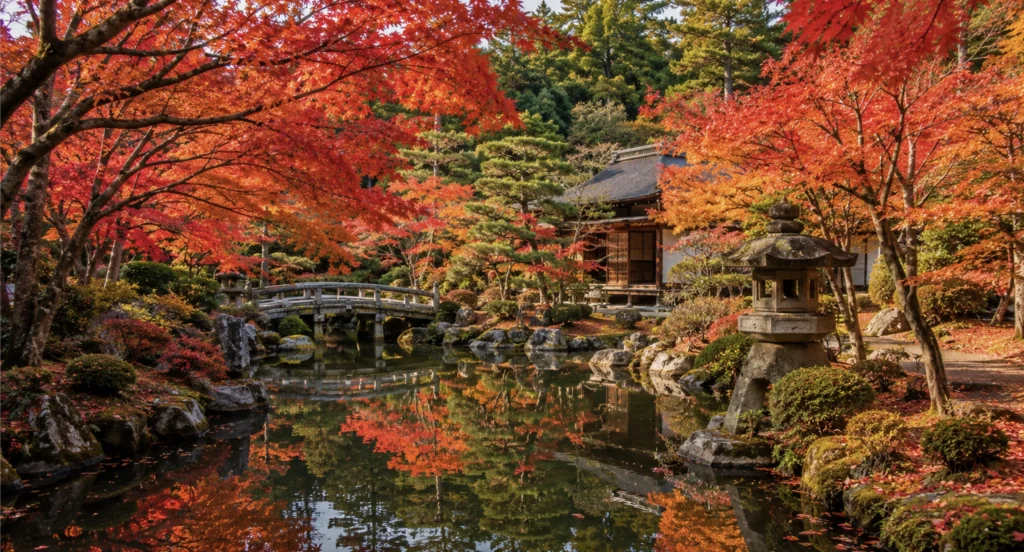
Although traditional garden design originated centuries ago, many of its principles continue to influence contemporary architecture, urban planning, and public spaces throughout Japan. Modern designers frequently incorporate concepts such as balance, natural materials, and seasonal awareness into projects that serve contemporary needs.
Public parks, commercial developments, hotels, and cultural institutions often include landscaped spaces inspired by traditional design philosophies. These environments provide opportunities for relaxation while maintaining a visual connection to historical traditions.
In northern Japan, seasonal landscapes remain an important source of inspiration. Gardens, parks, and natural attractions throughout Hokkaido highlight the dramatic changes that occur across the year, from vibrant summer greenery to colorful autumn foliage and snow-covered winter scenery.
Travelers exploring these landscapes frequently combine visits to parks, cultural sites, and scenic destinations with comfortable accommodations in nearby cities. Many visitors appreciate a premium sapporo luxury hotel surrounded by seasonal beauty, allowing them to experience both the region’s natural attractions and modern hospitality during the same journey.
The continued popularity of traditional landscape principles demonstrates their adaptability. Even within contemporary environments, these ideas remain effective in creating spaces that promote relaxation, reflection, and a stronger connection to nature.
Tips for Visiting Japanese Gardens
Visiting a Japanese garden is often most rewarding when approached at a slower pace. Unlike attractions designed for quick sightseeing, gardens encourage observation and appreciation of details that may not be immediately apparent.
Allowing time to walk along pathways, observe reflections, and notice seasonal changes can reveal elements that contribute to the overall design. Many visitors find that spending additional time within a garden leads to a greater appreciation of its atmosphere and craftsmanship.
Seasonal timing can also influence the experience significantly. While spring blossoms and autumn foliage attract considerable attention, every season offers unique characteristics that contribute to the beauty of traditional landscapes.
Frequently Asked Questions
What Makes Japanese Gardens Different From Other Gardens?
Japanese gardens are designed to create harmony between natural elements and human intervention. Rather than emphasizing symmetry or elaborate decoration, they often focus on balance, seasonal beauty, and carefully composed landscapes that encourage reflection and appreciation of nature.
When Is the Best Time to Visit Japanese Gardens?
Japanese gardens can be enjoyed throughout the year. Spring offers cherry blossoms, summer brings lush greenery, autumn is known for colorful foliage, and winter highlights minimalist landscapes shaped by snow and seasonal contrasts.
What Are the Most Famous Gardens in Japan?
Among the most well-known traditional gardens are Kenroku-en in Kanazawa, Koraku-en in Okayama, and Kairaku-en in Mito. These destinations are often recognized for their historical significance, scenic beauty, and carefully preserved landscape design.
Do Japanese Gardens Have Symbolic Meanings?
Yes. Many elements found within traditional gardens carry symbolic significance. Water may represent life’s continuous flow, stones can symbolize mountains or islands, and seasonal plants often reflect the passage of time and appreciation of nature.
Are Japanese Gardens Connected to Cultural Traditions?
Traditional landscape design is closely connected to broader cultural values, including simplicity, mindfulness, balance, and respect for the natural world. These principles continue to influence Japanese architecture, art, and public spaces today.
Can Visitors Photograph Japanese Gardens?
Photography is generally permitted in most public gardens, although specific locations may have guidelines regarding commercial photography, drones, or restricted areas. Visitors should always respect posted rules and other guests.
Why Are Seasonal Changes Important in Japanese Garden Design?
Seasonality is a fundamental aspect of Japanese aesthetics. Gardens are intentionally designed to evolve throughout the year, allowing visitors to appreciate different colors, textures, and natural characteristics as the seasons change.
Appreciating Japan Through Its Landscapes
Japanese gardens offer far more than beautiful scenery. They provide insight into cultural values, artistic traditions, and long-standing relationships between people and nature. Through careful design, these landscapes communicate ideas about balance, simplicity, and the importance of observing the world with patience and attention.
Whether exploring a renowned historic garden or a smaller local landscape, visitors often discover that each setting presents a unique interpretation of the same underlying principles. Water, stone, vegetation, and open space work together to create environments that feel both intentional and natural.
For travelers seeking a deeper understanding of Japan, traditional gardens provide an opportunity to experience cultural heritage in a quiet and meaningful way. Their enduring appeal demonstrates how thoughtful design and respect for nature can create spaces that continue to inspire visitors across generations and throughout every season.