
Indonesia spreads across more than 17,000 islands, so the honest question is never whether the diving is good. It is which water to get into first. Ask ten divers where the best diving in Indonesia is and you get ten answers, which is why sorting through the best diving spots in indonesia takes triage. A site that thrills a photographer with a macro lens will bore someone who came for pelagics. What follows is eight sites, each chosen because it does something the others do not.
What Makes Indonesia the World’s Richest Dive Destination?
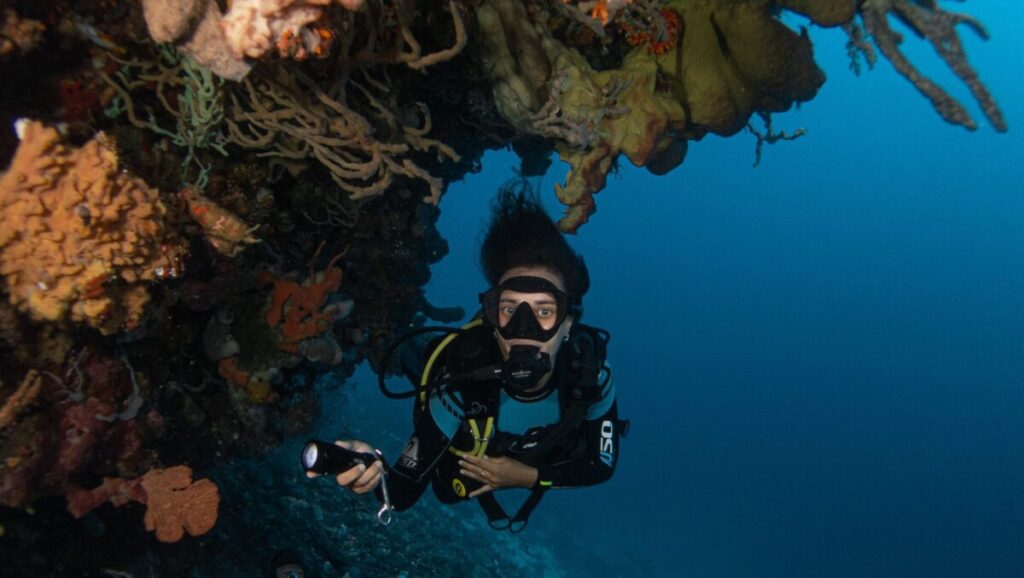
Indonesia sits at the centre of the Coral Triangle, the most biodiverse marine region on the planet. Its reefs cover close to 18% of the global total, and the region holds around 600 coral species, roughly 76% of every coral species known to science.
The cause is water movement. The Indonesian Throughflow pushes Pacific water through narrow straits, and every constriction turns it into a nutrient conveyor. Reefs in its path feed constantly, which is why the best sites are the exposed, awkward ones rather than sheltered bays.
“There’s nowhere on Earth that has as many fish, corals and everything else packed into one small place.” Dr. Mark Erdmann, coral reef ecologist, Conservation International
By comparison the Great Barrier Reef holds roughly 400 coral species. That gap is the whole argument for diving Indonesia ahead of more convenient destinations.
Raja Ampat Diving Sets the Benchmark for Biodiversity
Raja Ampat carries 553 coral species, the densest concentration recorded anywhere. Its signature dives are submerged pinnacles rather than fringing reef, so tide timing decides the dive more than depth. Most Raja Ampat liveaboard itineraries build the week around the Dampier Strait for that reason.
Blue Magic
A non emergent pinnacle in the northwest Dampier Strait, and the clearest demonstration of why this region matters. The whole food chain shows up in one dive: reef fish over the summit, snappers mid water, and mantas, barracuda, trevally and reef sharks working the blue.
It changes character with the tide. On slack it is approachable, on a running current it becomes a hook in and hold dive. Ask which you are getting before you drop, because this one site accounts for much of the best diving Raja Ampat gets credited with.
Magic Mountain (Karang Bayangan)
The ridge tops out near 6 metres on a calm day, putting the action in easy reach and giving photographers good light. Oceanic mantas visit the cleaning stations on a regular schedule, and the Indonesian name means Shadow Reef.
Sitting shallow makes this one of the few Raja Ampat highlights where a moderately experienced diver gets a long bottom time. Wobbegongs tuck under the ledges, so scan the overhangs too.
Which Komodo Dive Sites Handle Strong Current Best?
Komodo diving is a current discipline. The park sits where two oceans meet, and the sites worth travelling for are the ones exposed to that pressure. A Komodo liveaboard schedule is sequenced by tide tables, not by distance between anchorages.
Castle Rock
The reference point for Komodo. An exposed pinnacle facing current head on, where jacks, fusiliers, snappers, reef sharks and giant trevally hold station upcurrent and hunt in the turbulence behind it.
Standard approach is a negative entry, fast descent, then a reef hook on the exposed face while the action comes to you. For anyone whose goal is scuba diving with sharks, this is the most dependable site in the park. Crystal Rock nearby is similar but easier.
Shotgun (The Cauldron)
The passage between Gili Lawa Darat and Gili Lawa Laut, and the most theatrical dive in the park. Divers ride the flow through the narrowing channel, accelerate over a lip, and get flushed out over hard coral gardens.
It rewards passivity. Anyone who swims it burns air and misses the manta and eagle ray sightings in the calmer water at either end.
Do You Need Advanced Certification to Dive Komodo?
Most signature Komodo sites are current driven and rated advanced. Crystal Rock suits all levels, but practical drift experience matters more than the certification card itself.
Banda Sea Diving Is Built on Volcanic Geology
The Banda Sea is the archipelago’s deep water outlier. Visibility regularly reaches 50 metres and the seabed is volcanic rather than coral rubble, which changes the light and the species mix. Hammerheads pass through the deeper blue from September to November, and any Banda Sea liveaboard route is timed around that window.
Lava Flow
North of Banda Neira, on the flow left by Gunung Api Banda’s 1988 eruption. Banda Islands diving is defined by this geology: the lava destroyed the reef, then left the clean hard substrate coral colonises fastest.
The recovery is legible underwater. Follow the flow line and coral cover visibly thickens with distance from the source, something rare to see at reef scale.
Where Can You Go Scuba Diving With Whale Sharks?
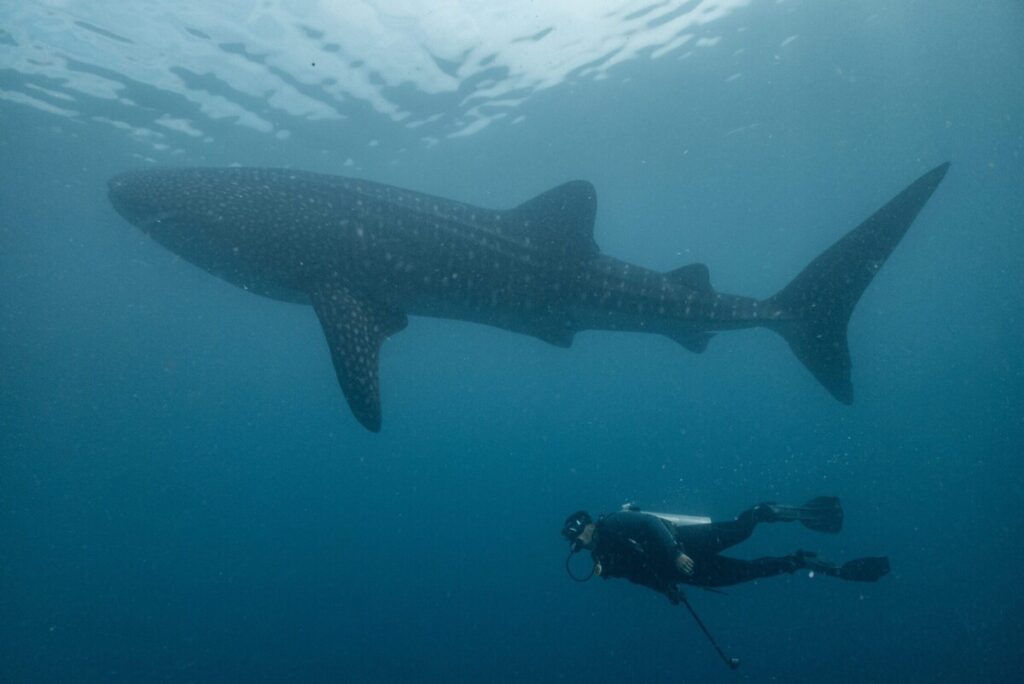
One site works on a relationship rather than luck. Bagans are floating fishing platforms run by sea nomad communities, and whale sharks feed beneath them each morning on sardines drawn through the netting.
Bagang, Triton Bay
Divers enter alongside the platform while the sharks are feeding, which produces long, unhurried encounters instead of the fleeting pass typical of open water sightings.
Because they are feeding rather than travelling, they stay shallow and largely ignore divers. The bagans off Sumbawa run the same dynamic and often add dolphins, a useful substitute when Triton Bay falls outside your window.
Are Whale Shark Encounters at Bagans Guaranteed?
No encounter is guaranteed. Sightings at bagan platforms in Triton Bay and Sumbawa are frequent because the sharks feed there daily, but they remain wild animals on their own schedule.
Alor and Sulawesi Reward Divers Who Go Further
These see a fraction of Raja Ampat’s traffic, and between them they cover the two gaps the headline destinations leave open: serious macro, and reef beginners can actually enjoy. Sulawesi diving in particular gets skipped by planners who never look past the two famous parks.
Wolang Cavern, Alor
Two caverns holding marble rays and nurse sharks, egg cases wedged visibly into the rock, opening onto a wall of orange soft coral. The dive most Alor guides push you toward first.
Alor island diving is otherwise defined by critter density. The anemone beds off Pura island shelter clownfish, nudibranchs, seahorses and frogfish, best paired with a camera and a slow pace.
Black Forest, Togean Islands
An intact ancient coral formation resembling a submerged Christmas tree forest, with Napoleon wrasse and rainbow runners in strong visibility. The Togean Islands sit in Central Sulawesi, which is why Togean island diving rarely appears on standard itineraries.
It is also the gentlest of the country’s serious dive regions: warm, protected water and manageable current. For anyone building experience before Komodo, this is where to log the hours.
How Do You Match the Season to the Right Region?
There is no single dive season. Each region peaks at a different point in the monsoon cycle, which makes route planning matter more than site selection.
| Region | Best window | What drives the timing |
| Raja Ampat | October to April | Calm seas, manta aggregations in Dampier Strait |
| Komodo | April to November | Dry season visibility and settled crossings |
| Banda Sea | September to November | Hammerhead season and glassy conditions |
| Triton Bay | November to April | Whale sharks feeding at the bagans |
| Alor | May to November | Reduced rainfall, cool thermoclines |
| Halmahera | October to April | Sheltered from the northern monsoon |
| Togean, Sulawesi | March to November | Warm, protected water most of the year |
This is where liveaboard diving earns its place. Banda, Triton Bay, Halmahera and Alor have almost no shore based infrastructure, so reaching them in season needs a boat that reroutes with the calendar rather than a resort that stays put. The best diving liveaboard is simply the one whose route matches your month.
Operators such as Jakaré Liveaboard run Komodo to Sumbawa when the southern window opens and shift to Ambon and Banda later in the year, which is how one trip covers a region rather than a bay.
Start With One Region, Then Let the Route Grow
Nobody dives all of this in one trip, and the divers who try come home with a lot of transit and little water time. Pick the region that matches what excites you underwater, whether that is arguing with current at Castle Rock or hanging weightless under a bagan, and build around it.
If a longer Coral Triangle route is where your thinking is heading, look through Jakaré Liveaboard and see how their seasonal itineraries line up with the window you have. The right liveaboard in Indonesia on the right route turns a dive holiday into an expedition.
Frequently Asked Questions
What Is the Best Time of Year to Dive in Indonesia?
It depends on the region. Raja Ampat peaks October to April, Komodo April to November, and the Banda Sea September to November during hammerhead season.
Which Indonesian Dive Site Is Best for Beginners?
Black Forest in the Togean Islands, Sulawesi, is calm, shallow and warm. Avoid Komodo’s exposed pinnacles until drift experience is solid.
Is a Liveaboard Better Than Shore Based Diving in Indonesia?
For a Banda Sea liveaboard route, Triton Bay, Halmahera or Alor, a boat is effectively the only practical access. Komodo and parts of Raja Ampat also support shore based operations.
How Many Dives Should You Have Before Diving Raja Ampat?
Roughly 30 to 50 logged dives, with genuine current experience. Sites like Blue Magic change difficulty entirely with the tide.


